Monitor – Measure – Analyze – Adjust
Over 35 years we have developed and refined a set of processes and tools to measure project status relative to the OPS, identify and track issues impacting the OPS, and effectively communicate with all stakeholders.
At Draper, we understand that the Overall Project Schedule is a powerful project management tool. However, we also understand that project success is dependent on the continual monitoring and controlling of the schedule throughout the life of the project.
The Draper System for Schedule Monitoring and Controlling is proactive in nature allowing the project team to continually understand where the project stands relative to the goals and objectives. The integrated series of processes and tools provide information to the team thus allowing key decisions to be made in a timely manner increasing the likelihood of project success.
Job Coordination Meetings (JCM)
The Draper consultant will typically visit the project site on a bi-weekly basis to status the job and support the Project Manager and Superintendent in conducting the schedule related aspects of the project meeting. Key participants required to attend the JCM include the PM, Superintendent, and active/near-active Subconsultants/Trades. Draper utilizes the Pull Planning Methodology when conducting the meeting and key items addressed include:
- Updated the Near-Term Schedule (NTS)
- Reviewing the Project Trend
- Identifying Opportunities and Issues
- Planning Solutions
- Establishing Near-Term Commitments to support the OPS
- Statusing the OPS
Job Status Walk/Walking Papers
Prior to conducting the JCM, the Draper consultant will perform a project inspection to obtain a first-hand view of detailed activity progress and overall site status. During the walk, photographs are taken to document/verify status of activities. The Near-Term Schedules are utilized to capture and track actual progress achieved in the preceding two-week period and compare to commitments.
For projects that involve multiple floor and repetitive activities, the consultant utilizes our proprietary Walking Papers App to record progress for each unit. Utilizing the Walking Papers insures accurate recording of progress on work activities. The report generated from the app utilizes an algorithm to assign a color-coded status to each activity that allows the client to quickly see where there are issues with production.
Near-Term Schedules (NTS)
The Near-Term Schedule (NTS), developed from the Overall Project Schedule, is the primary tool utilized by the Draper in conducting the Job Coordination Meeting. The NTS provides a more detailed look at specific activities within a given time frame, typically an 8-week look ahead.
The NTS is updated by the Draper consultant during the status walk and serves as the agenda for meeting, focusing project participants on upcoming activities and continuously re-securing near term commitments to support the broader OPS goals and objectives. Draper utilizes the Pull Planning methodology to discuss and capture these commitments and participants are provided with an updated NTS following the meeting that is utilized over the next 2-week period.
As necessary, the NTS can be revised to reflect either a plan for acceleration to make up for inadequate performance, or an alternative, better approach to the remainder of the work to be done.
Action Item Agenda (AIA)
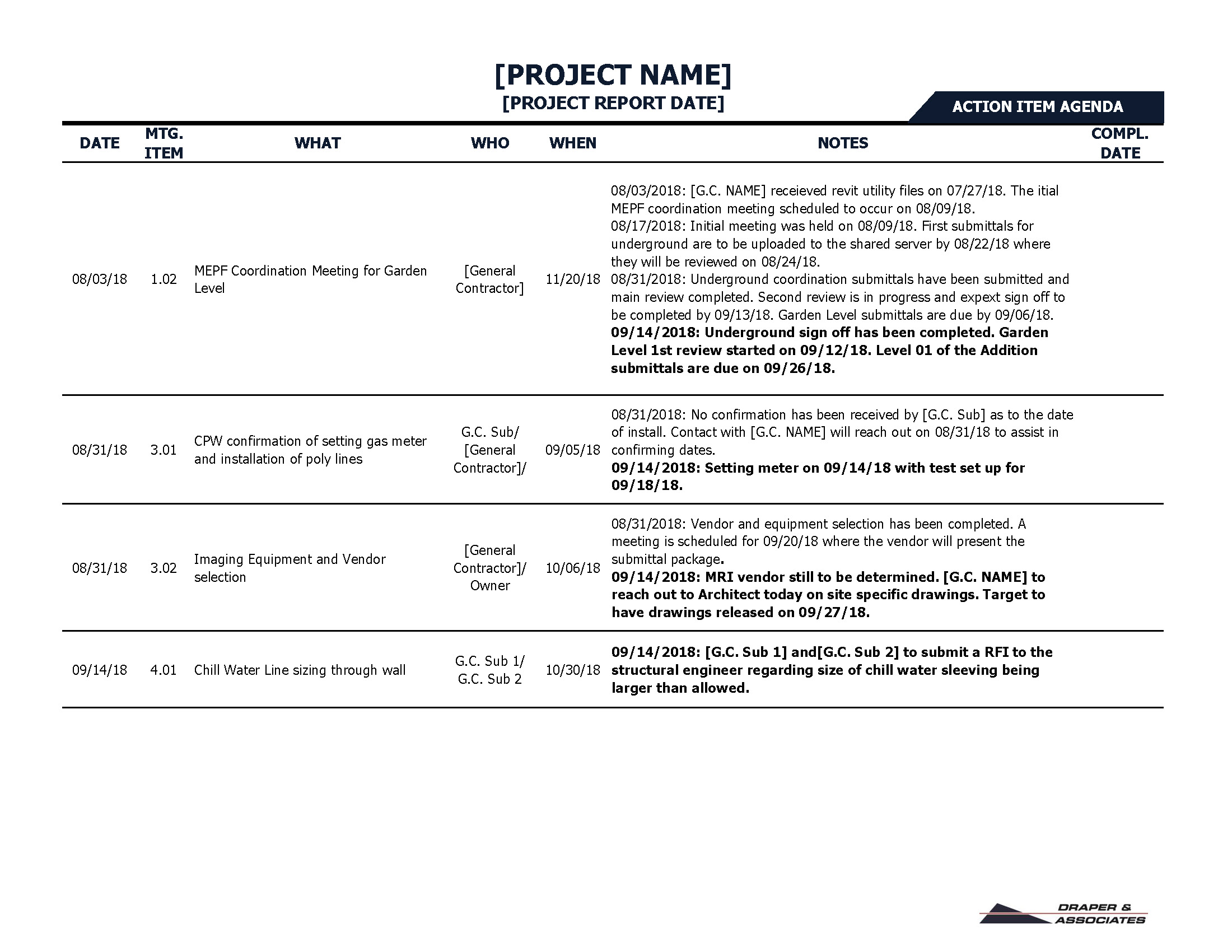
The Action Item Agenda (AIA) is a key tool utilized by the Draper consultant during the Job Coordination Meeting. As key issues are identified that can potentially impact achieving the goals and objectives of the OPS, they are captured and tracked utilizing the AIA.
Each action item is assigned an owner with due date and notes captured. The AIA is reviewed during each meeting and updates documented until the item has been resolved.
Trend Chart
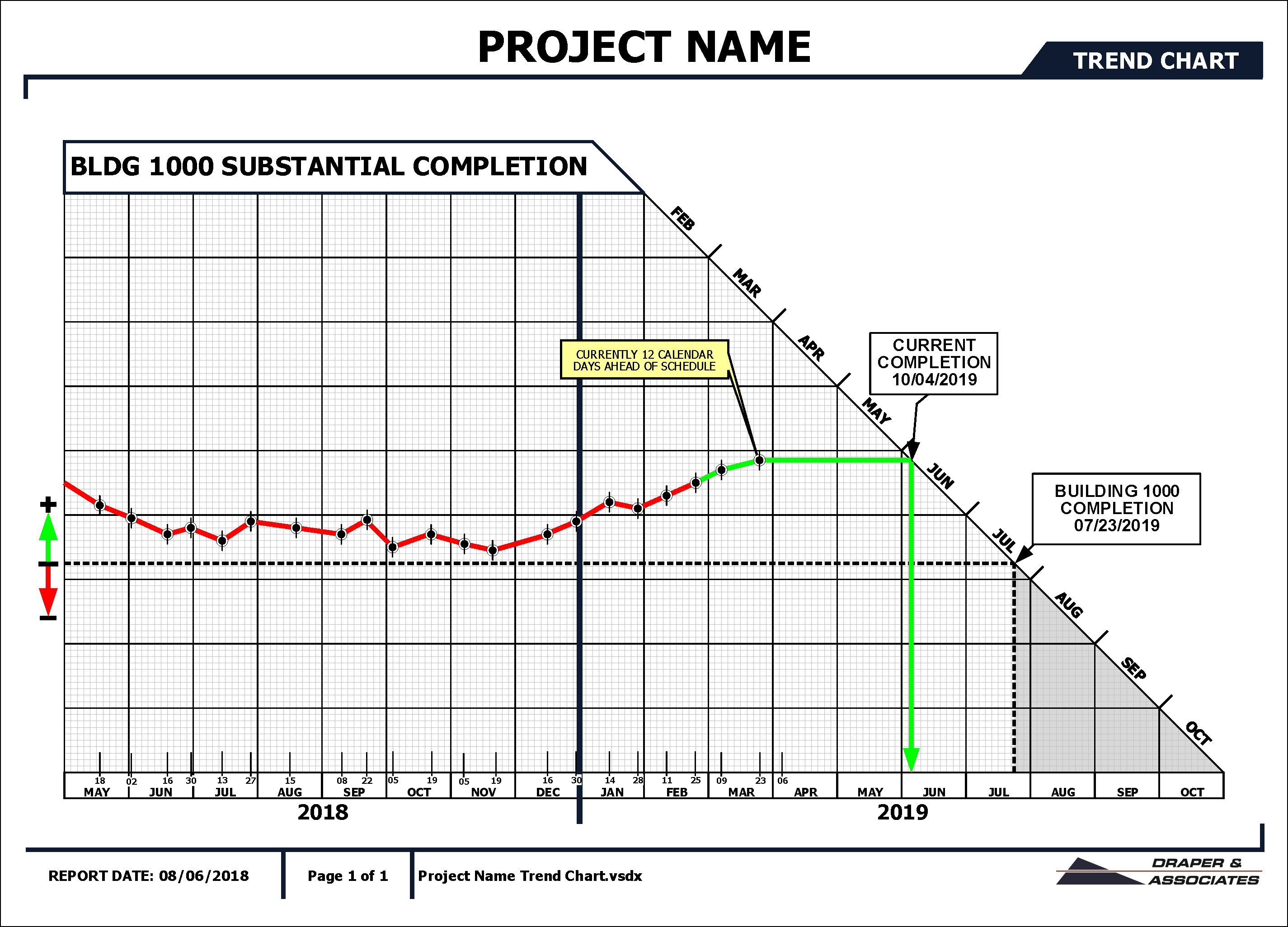
One of the most powerful management information tools that can be prepared by a Draper Consultant is the Trend Chart. A Trend Chart is a graphic representation of how a particular key event/milestone is progressing towards completion. The data provided by Trend charts is valuable as it portrays the probable future status of an event if schedule planning and progress is not proactively altered. The Trend Chart is an especially useful tool for executive-level stakeholders who need to understand the overall status of a project quickly.